
After 2020, something shifted at the grocery store. People started flipping packets over. Reading the back label. Squinting at ingredient lists they’d never really bothered with before. The bakery aisle was no exception.
For years, the Indian bakery category carried a quiet reputation problem — neighbourhood bakeries with open display trays, unverified ingredients, packed loosely and no real traceability. The question wasn’t just about taste anymore. It was about trust.
That shift has pushed a new set of hygienic bakery brands India-wide into the spotlight — brands that document their manufacturing, state their ingredients plainly, and back those claims with verifiable practices. This piece looks at what’s driving that change across the category.
Why Indian Consumers Are Questioning Their Snack Choices
It didn’t happen overnight. A few food safety controversies, some viral social media posts about undisclosed additives, and suddenly the conversation around “what’s actually in my biscuit” picked up. Sharply.
Search behaviour reflects this. More people are looking up terms like “no artificial colour bread” or safe bakery products India than they were five years ago. Parents scanning khari packs for colour codes. Older consumers asking why a simple toast should need preservatives at all.
This isn’t a diet trend. It’s a trust concern. People aren’t necessarily counting calories — they’re asking whether what they’re eating was made in a genuinely clean environment. The question of hygienic bakery snacks has moved from niche food communities to everyday grocery conversations.
Brands that haven’t kept up with this shift are finding it harder to hold shelf space — both in retail stores and in the minds of repeat buyers.
What ‘Transparent Bakery Practices’ Actually Means
Transparency is one of those words that gets used a lot but explained very little. In the bakery context, it means a few specific things:
- No bromates* or artificial colours used at any stage of production — stated clearly on the pack, not buried in fine print
- Veg certification that covers the entire facility, not just individual products
- Ingredient sourcing the brand can speak to — in plain language, not regulatory jargon
*Bromates are chemicals that make bread dough more elastic, resulting in a fluffier texture.
If a brand can’t explain what goes into their cream roll in plain English, that’s worth pausing on. Transparent bakery practices India consumers are beginning to demand aren’t about fancy certificates framed on a wall — they’re about whether a brand can answer basic questions without deflecting.
This level of openness is still relatively rare in the category. Which is exactly why the brands doing it correctly are starting to stand out.
The Role of Automated Manufacturing in Building Trust
Manual bakery production isn’t inherently bad. But it does introduce variability — in ingredient ratios, in surface hygiene, in portion consistency. Automation reduces that variability significantly.
When a brand uses automated bakery manufacturing lines, the same dough formula runs the same way each time. Fewer touchpoints where contamination can enter. Better alignment with FSSAI food safety benchmarks. And more reliable consistency from one batch to the next.
Retailers have noticed. Modern trade channels increasingly prefer suppliers with GMP-compliant facilities because it reduces their own liability. Consumers are catching on too — consistent texture and freshness across multiple purchases is actually a tell-tale sign that a brand has its production process under real control.
This is quietly becoming a sorting mechanism across the FMCG bakery segment.
Why ‘Pure Veg’ Is More Than a Logo on a Packet
The green dot is everywhere. On khari, on cookies, on toast. But what does it actually guarantee?
For a brand to genuinely qualify as a pure veg bakery brand, it’s not enough for the product itself to be vegetarian. The manufacturing facility needs to be 100% vegetarian. That means no non-veg items processed on the same equipment — not on shared conveyor belts, not in shared mixers.
This matters enormously for families with religious food restrictions, Jain households, and consumers who observe particular dietary practices. They’re not being fussy — they’re asking a completely legitimate question about cross-contamination.
The growth of a properly committed vegetarian bakery India segment means these consumers finally have options where the green dot is backed by the entire production line, not just the product label.
Brands Leading This Category Shift
The good news is that this shift isn’t just consumer aspiration — some brands are already operating this way.
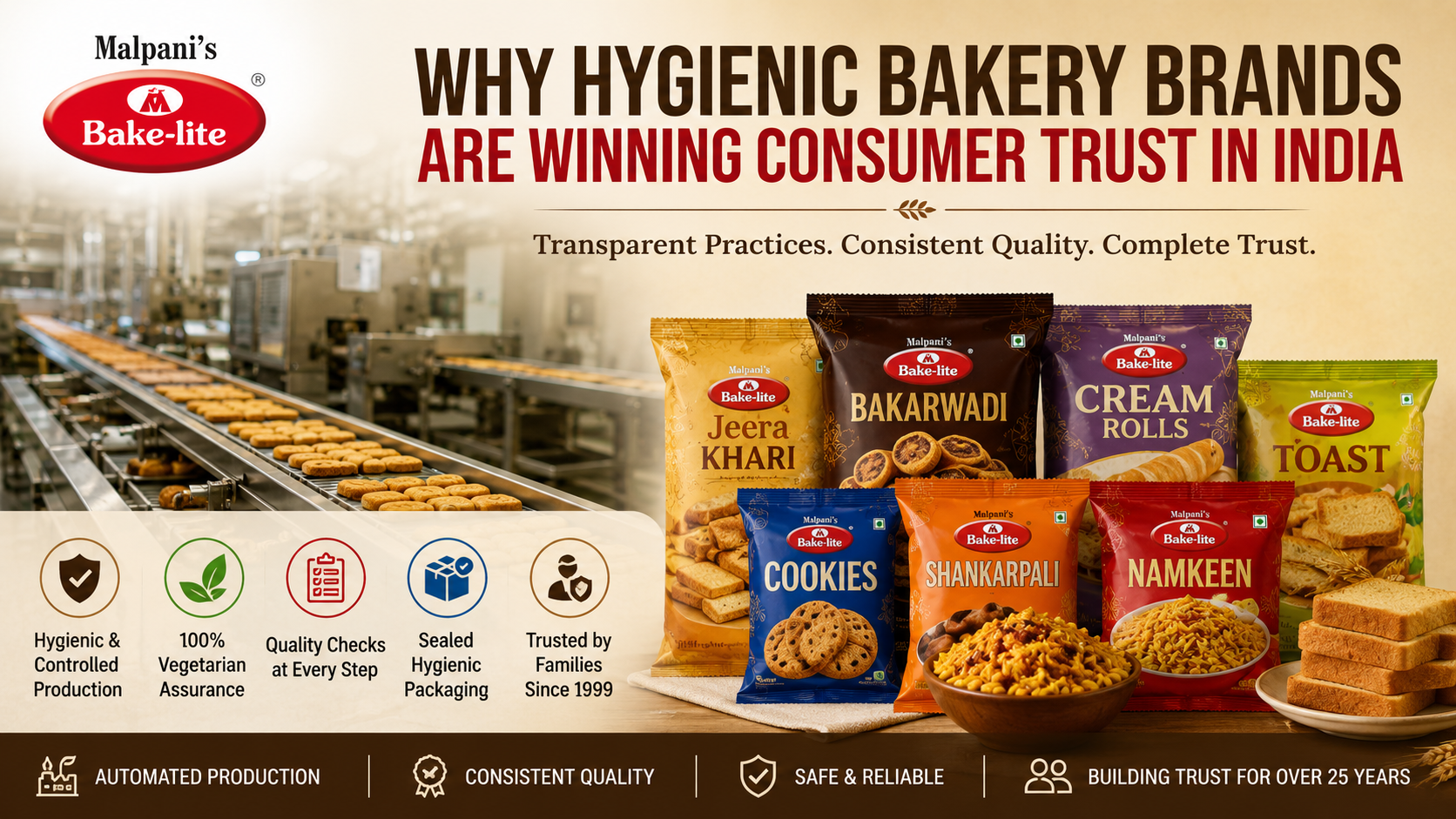
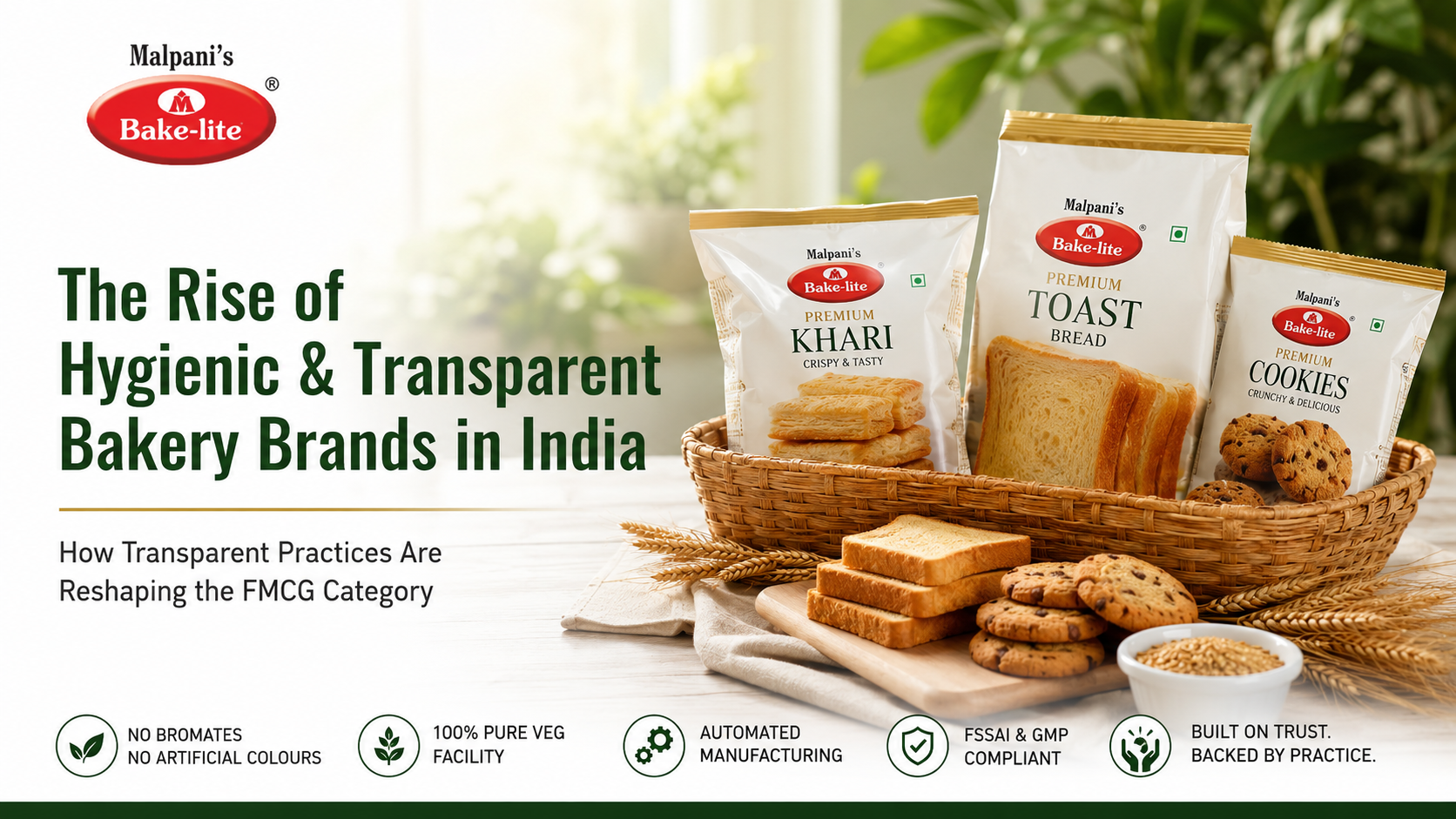
Pune-based names have been at the forefront. Among trusted bakery brands India has seen build credibility over the past two decades, Malpani’s Bakelite is one example worth looking at. With over 25 years of operations, a 100% vegetarian facility, and a manufacturing process that avoids bromates and artificial colours, the brand represents what the category’s next phase looks like in practice.
If you want to understand the practices setting benchmarks in this space, their story as a pure veg bakery brand is worth reading.
The broader point: this isn’t about any one brand. It’s about a category-wide expectation that is only going to grow stronger.
A Quick Checklist: How to Spot a Genuinely Transparent Bakery Brand
Next time you pick up a pack, run through this:
- Look for explicit “no bromates” or “no artificial colours” claims on the packaging
- Check whether the entire facility is 100% veg — not just the product
- Prefer brands with automated, FSSAI-compliant manufacturing
- Look for consistent product quality across batches — a sign of process control
- Read reviews for mentions of packaging hygiene and freshness on arrival
Small checks. But they separate a genuinely transparent brand from one that’s just using the right words on the label.
The Category Is Maturing — Slowly but Unmistakably
The Indian bakery buyer who once purchased whatever was available at the corner store is now comparing labels, asking questions, and choosing brands that can actually answer them.
Brands investing in genuine transparency today — in their manufacturing, their ingredients, their veg commitments — will be the trusted bakery brands India reaches for in the years ahead. The ones that don’t will find the gap between them and the consumer widening, one packet at a time.
FAQs
Q: What makes a bakery brand hygienic?
A hygienic bakery brand maintains controlled manufacturing environments, follows FSSAI-compliant processes, avoids unnecessary additives like bromates and artificial colours, and uses packaging that protects the product from contamination during transit and storage.
Q: How do I know if a snack is truly pure veg?
Check whether the entire manufacturing facility is 100% vegetarian — not just the product. A genuine pure veg brand processes no non-vegetarian items on shared equipment. Look for facility-level veg certification, not just the green dot printed on the pack.