
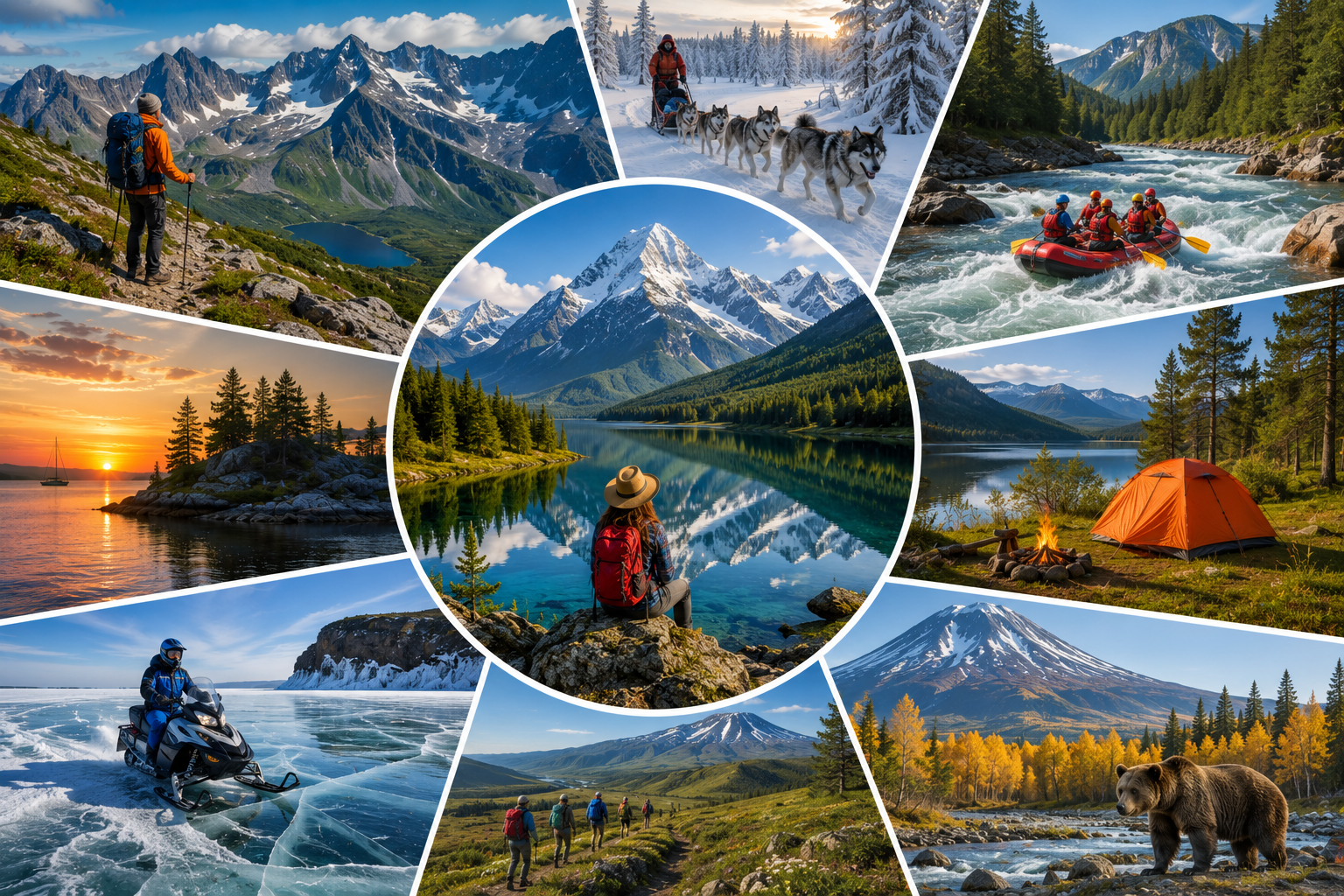
When most people think of Russia, they picture the red brick walls of the Kremlin, the colorful onion domes of St. Basil’s Cathedral, or the grand imperial palaces of St. Petersburg. While these cultural landmarks are spectacular, they only tell a fraction of the story.
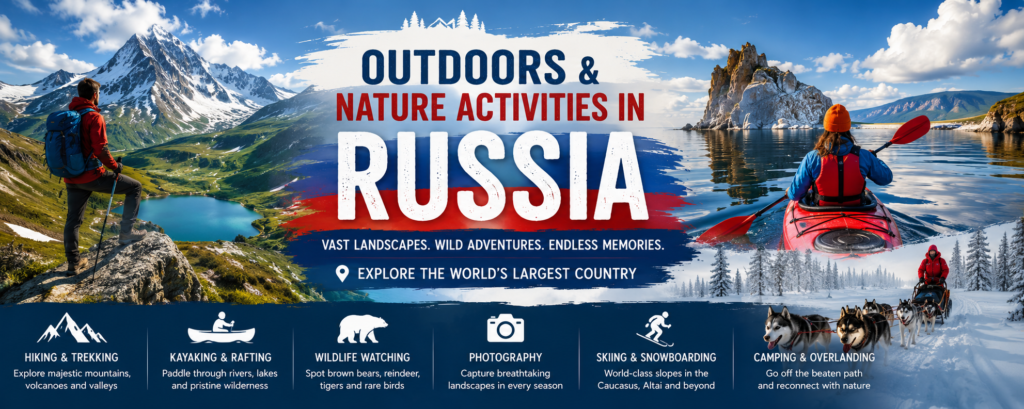
Where are the best places to experience nature in Russia?
If you want to step away from the crowds and immerse yourself in raw nature, these four regions should be at the very top of your travel bucket list:1. Lake Baikal (Siberia)
Known as the “Pearl of Siberia,” Lake Baikal is the oldest and deepest freshwater lake in the world. It holds roughly 20% of the planet’s unfrozen surface freshwater. In the summer, the lake is surrounded by lush green hiking trails, and its water is incredibly clear. In the winter, Baikal transforms into a magical wonderland of thick, transparent ice, marked by beautiful cracks and frozen bubbles.2. The Altai Mountains
Located in southern Siberia, where Russia, Mongolia, China, and Kazakhstan meet, the Altai region is often called the “Russian Switzerland.” However, Altai is far wilder and less commercialized. It is a stunning landscape of snow-capped peaks, rushing turquoise rivers, alpine meadows, and quiet larch forests.3. The Kamchatka Peninsula (Far East)
For the ultimate adventure, head to Kamchatka in the Russian Far East. Located on the Pacific “Ring of Fire,” this peninsula is home to over 300 volcanoes, dozens of which are still active. It is a land of geysers, thermal hot springs, dramatic coastlines, and a massive population of wild brown bears.4. Karelia
If you are starting your trip in St. Petersburg, Karelia is the perfect nearby escape. Bordering Finland, this peaceful region is dominated by dense pine forests, rushing waterfalls, and thousands of lakes. It is highly accessible and popular for weekend camping, kayaking, and light hiking.What are the top outdoor activities to try in Russia?
No matter what kind of adventure you prefer, Russia’s diverse landscapes offer activities for every fitness level.- Mountain Climbing in the Caucasus: The Caucasus Mountain Range is home to Mount Elbrus. Standing at 5,642 meters (18,510 feet), it is the highest peak in Europe. Climbing Elbrus is a challenging but popular mountaineering achievement.
- Wildlife Watching: Kamchatka offers world-class bear-viewing opportunities, especially around Kurilskoye Lake, where hundreds of brown bears gather during the annual salmon run. In the northern Arctic regions, you can also spot reindeer, Arctic foxes, and snowy owls.
- Ice Adventures: Winter in Russia is not just cold—it is incredibly fun. You can try dog-sledding through Siberian forests, snowmobiling in Karelia, or taking a hovercraft ride across the frozen surface of Lake Baikal.
- River Rafting: The Katun River in Altai offers thrilling white-water rafting opportunities ranging from beginner-friendly floats to intense, professional-grade rapids.
When is the best time of year to visit Russia for outdoor adventures?
Because Russia is so vast, the best time to visit depends entirely on what you want to do:- Summer (June to August): This is the peak season for hiking, mountain climbing, camping, and white-water rafting. Temperatures are warm (typically between 20°C and 25°C in places like Altai and Baikal), making it very comfortable to explore. It is also the best time to see active wildlife and wildflowers.
- Late Winter (February to March): If you want to experience the legendary Russian winter, this is the best window. By February, the ice on Lake Baikal is thick enough to drive on, the snow conditions are perfect for skiing, and you have excellent chances of spotting the Northern Lights in northern cities like Murmansk.
How can you explore Russia’s national parks safely?
Russia has over 60 national parks and protected nature reserves. Because many of these areas are incredibly remote and wild, safety should always be your main priority.- Hire a Local Guide: For remote regions like Kamchatka, Altai, or the Siberian Taiga, traveling with a licensed local guide is highly recommended. They know the terrain, understand the local wildlife (including how to avoid unwanted bear encounters), and can help you navigate changing weather patterns.
- Pack in Layers: Russian weather can be unpredictable. Even in the summer, mountain regions can get very cold at night. Pack waterproof outerwear, sturdy and broken-in hiking boots, thermal layers, and reliable insect repellent.
Do you need a visa to explore Russia’s natural wonders?
Yes, most international travelers require a valid visa to enter the Russian Federation. Fortunately, planning your outdoor getaway has become much easier thanks to the introduction of the electronic visa (e-visa). This allows you to apply online without visiting an embassy or consulate in person. Before planning your routes through the mountains and lakes, make sure to check if your country is on the eligible list. You can view the complete and up-to-date directory of countries here: Russian E-Visa Eligible Countries.Why Choose Us?
Planning a trip to a country as vast as Russia can feel overwhelming, but securing your travel documents shouldn’t be. We are here to help you get your travel visa smoothly and quickly so you can focus on packing your gear and planning your itinerary. Here is why travelers choose our services:- Reliable Travel Visa Services: Our global approach has assisted numerous travelers in successfully obtaining their visas with peace of mind.
- Round-the-Clock Assistance: Reach out to us 24/7, and our experienced visa experts will respond to your queries within 72 hours.
- Experienced Visa Consultants: Receive expert, step-by-step guidance to ensure your application meets all official requirements and is accepted without delays.
- Efficient Visa Application Process: Skip the confusing paperwork. Apply for your visa in just a few minutes using our highly simplified online form.