
Walk into any decent kirana or supermarket today and you will notice something different about how people pick up bakery packets. They read the back of the pack. They check the veg mark. They look at whether the seal is properly done. Indian snack buyers — families stocking up for evening chai, office pantries ordering weekly, anyone picking up khari or cream rolls for a gathering — are asking more questions than they did five years ago. This is exactly why hygienic bakery brands India has become a real search category. People are not just looking for taste. They want to know how their snacks were made.
Why Bakery Trust Became a Bigger Consumer Issue
The bakery category has long carried a casual attitude toward handling. Loose biscuits in open jars, namkeen sold from bulk bins, cream rolls wrapped in cling film with no visible date — this was simply how things worked for many years. Most buyers accepted it without much thought.
That began shifting after 2020. Urban buyers started paying attention to where their food came from. Social media brought factory floors and production kitchens into living rooms — some of those videos built confidence, others did the opposite. Food safety conversations spread fast across WhatsApp groups and food forums. Families began comparing brands more carefully before deciding what to bring home.
The result is a buyer who now wants clarity before a repeat purchase — not alarm, just information. That is a fair and reasonable expectation from any brand in the category.
What Transparent Bakery Practices India Should Mean
Transparency in food production is not any single thing. For bakery buyers in India, transparent bakery practices India should cover at least three clear areas:
- Clear ingredient and allergen information. The label should list contents in plain language, not just technical ingredient names that most people cannot parse without looking them up.
- Clear production and packing standards. Buyers want assurance that the facility has quality control in place, whether through batch checks, sealed packaging, or consistent product texture across purchases.
- Clear brand information that buyers can verify. A website, a contact number, an address on the pack. If a brand cannot be found beyond its own label, that creates doubt.
These are not demanding expectations. They are what a confident brand with nothing to hide should already be doing. Brands that communicate these things clearly tend to retain their customers. Those that do not often lose repeat buyers to better-labelled alternatives.
Why Hygiene Is Now Part of Brand Recall
Taste still drives the first purchase. A khari that crumbles well with evening chai, a cream roll with the right filling, a toast that holds its texture — these things bring buyers to a brand initially.
But trust drives the repeat purchase. Increasingly, that trust is built around the physical experience of receiving a product. Is the seal intact? Is the texture consistent with the last pack? Is the best-before date clearly printed?
For products like khari, cookies, namkeen, and cream rolls bought regularly and shared with family, these small details compound. A pack of shankarpali or bakarwadi that arrives crumbled is not just a disappointment — it shapes where that buyer goes next time. The same holds for toast that does not match expectations. Small signals, repeated often, become the basis of brand reputation.
How Automation and Quality Checks Support Trust
One of the quieter shifts across packaged food is in production processes. Brands that have moved toward automated or semi-automated manufacturing tend to deliver more consistent results than those relying on manual processes at scale.
What automation does well is reduce variability. Consistent portioning means each packet of namkeen or each batch of cookies contains roughly what it should. Fewer manual handling stages mean less contamination risk between production and packaging. Temperature and timing controls mean baked products come out more reliably.
For buyers, this means a more dependable experience purchase after purchase. Most people do not think about the production line when they open a packet of jeera khari. But they notice when the product is noticeably different from last time. Consistency, across months and batches, builds quiet and durable trust.
Malpani’s Bakelite as a Category Example
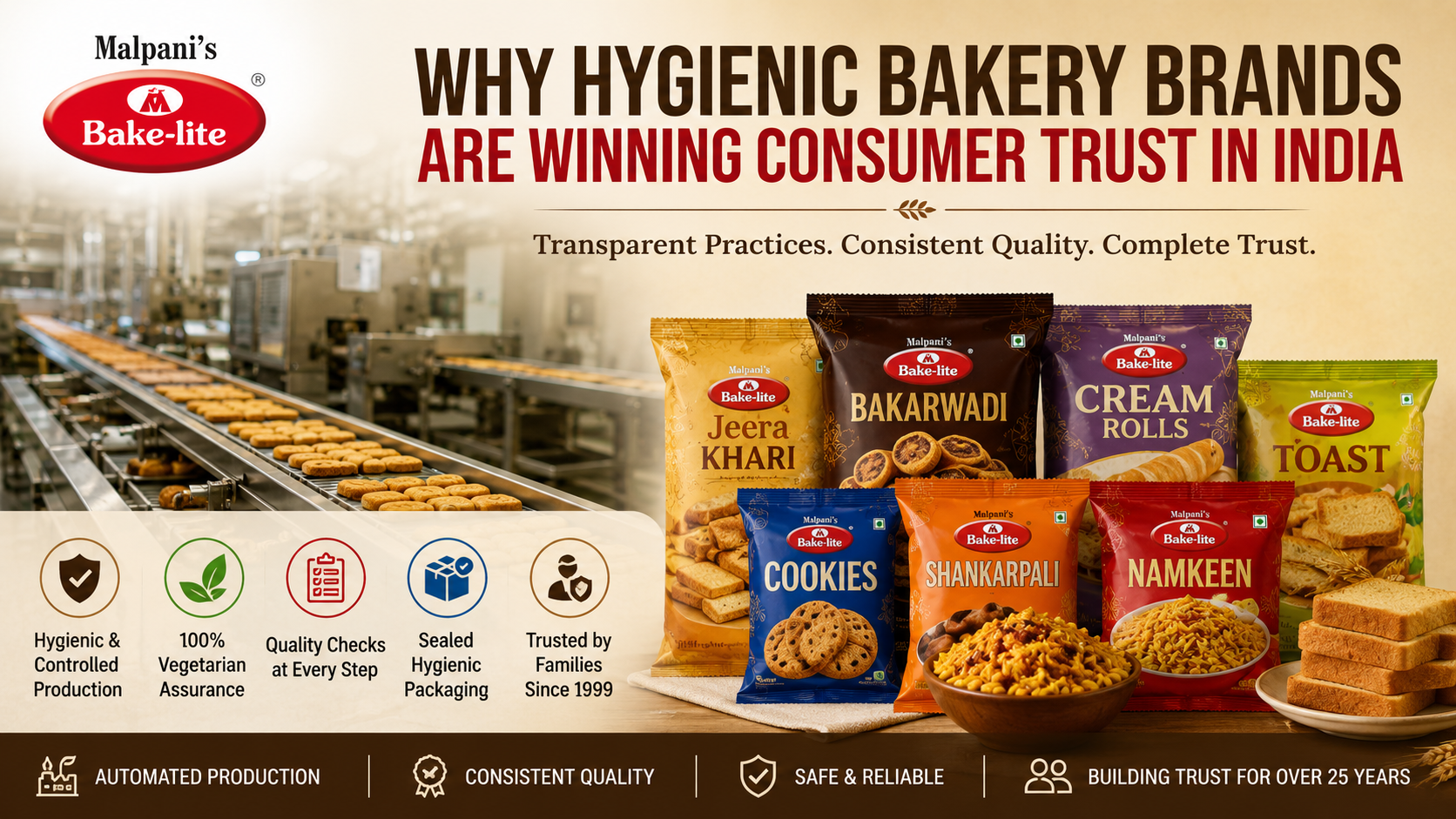
A useful example from the Pune bakery market is Malpani’s Bakelite. Founded in 1999, the brand has been operating from a dedicated plant at Narhe MIDC, Pune, for over 25 years. The entire range is 100% vegetarian — across both bakery products like khari, cream rolls, toast, cookies, and cakes, and the namkeen range.
What makes it a relevant example here is the combination of automated production at the Narhe facility with a verifiable vegetarian assurance. Products go through quality checks before packing, and the brand has maintained consistent manufacturing standards throughout its history. That kind of discipline is what allows a brand to hold consumer trust for over two decades in a competitive snack market.
For anyone curious about what process-first thinking looks like in this category, their full product range is a fair reference point.
Quick Buyer Checklist
Before picking up any packaged bakery product, run through these quickly:
- Read the ingredient list — it should be written in plain terms, not just technical names.
- Check the veg mark and any allergen details relevant to your household.
- Check the pack seal and best-before date before buying.
- Look for brand contact information — a website or address on the pack.
- Read delivery condition reviews if ordering online.
A brand that holds up across most of these points is likely one that takes its own standards seriously.
Consumer trust in the Indian bakery category is slowly moving away from taste alone. Buyers are reading more, comparing more, and noticing more. Brands that have invested in consistent production, clear labelling, and verifiable information are the ones building sustained loyalty. It simply shows what happens when a category starts to value process as much as it has always valued flavour.
FAQs
What makes a bakery brand hygienic?
A hygienic bakery brand follows controlled production processes, uses sealed and tamper-evident packaging, maintains consistent batch quality, and is transparent about its facility standards. It is not only about the physical space — it is about documented, repeatable practices that a buyer can reasonably expect to hold every time they purchase.
Why do transparent bakery practices matter?
Transparent bakery practices matter because they help buyers make informed repeat purchase decisions. When a brand clearly communicates its ingredients, production standards, and vegetarian or allergen details, buyers can trust the product without needing to investigate further. In a category where handling has historically been opaque, transparency becomes a genuine differentiator.