
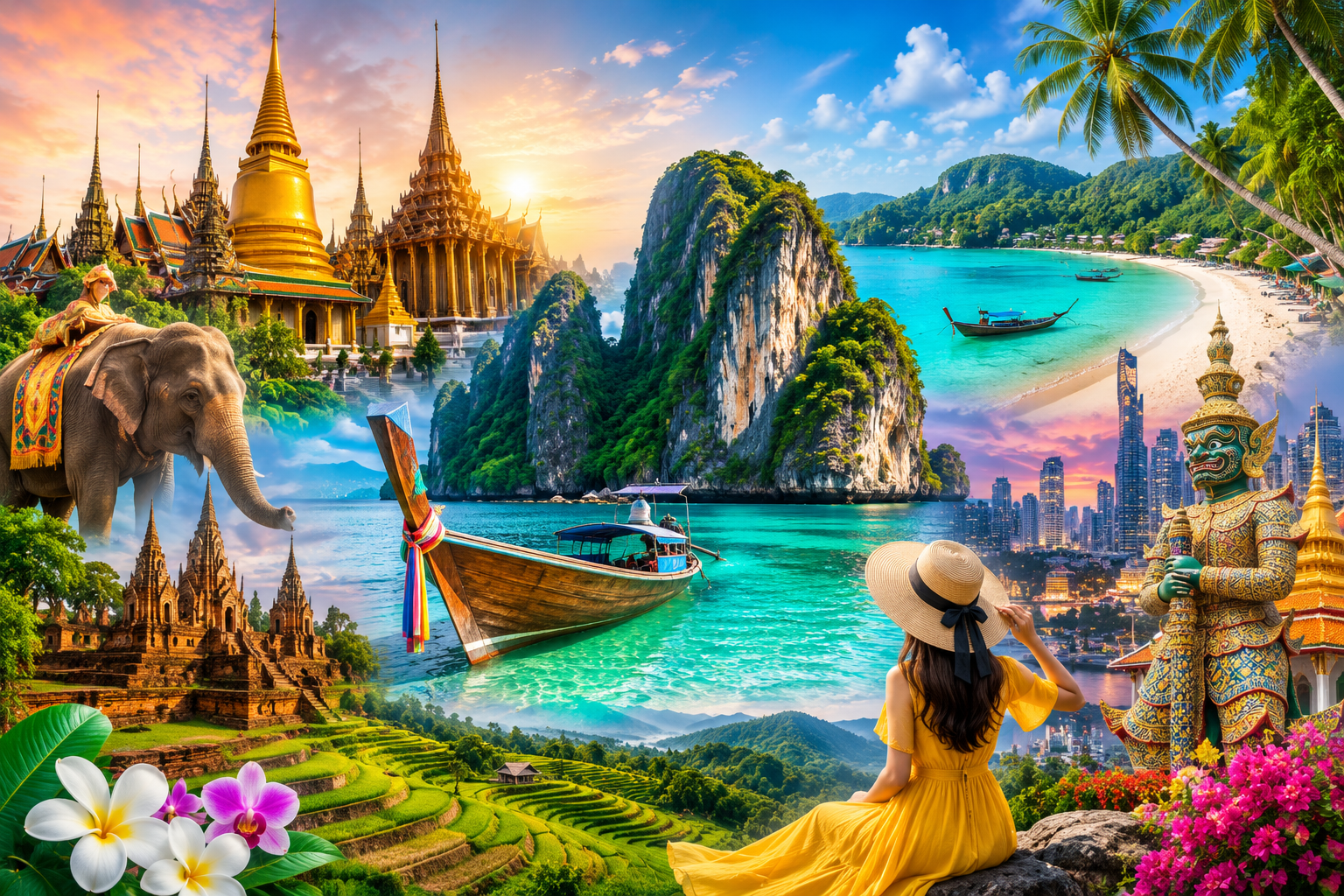
Planning a trip to Thailand is incredibly exciting, but it can also feel overwhelming. One search online reveals hundreds of islands, dozens of national parks, and conflicting opinions on where you should spend your precious vacation days.
1. Why is Thailand still the ultimate travel destination in Southeast Asia?
Thailand manages to strike a rare balance that few other global destinations can replicate. It is incredibly budget-friendly, exceptionally easy to navigate, and offers a highly diverse range of experiences. Within a single week, you can explore centuries-old golden temples, trek through deep tropical jungles, eat world-class street food for less than three dollars, and relax on white-sand beaches. Whether you are traveling solo, backpacking on a budget, or planning a luxury family getaway, the warmth of the local Thai people and the sheer variety of landscapes make it a destination that lives up to the hype.2. What are the best places to travel in Thailand for first-timers?
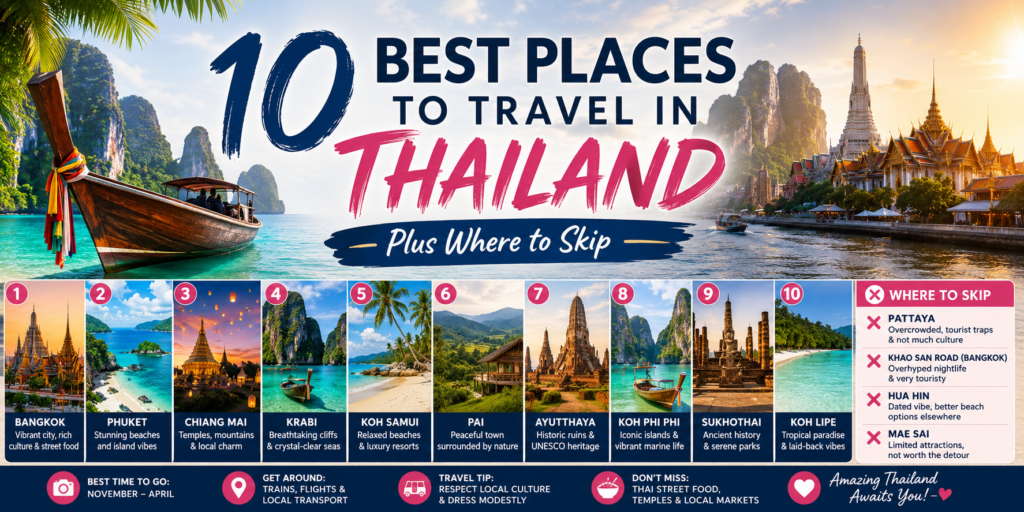
If it is your very first time landing in Thailand, you want a mix of vibrant urban energy and rich cultural heritage. These two classic hubs belong on every beginner’s itinerary:- Bangkok: The chaotic, beautiful capital city is a sensory overload in the best way possible. Spend your days marveling at the gleaming spires of the Grand Palace and Wat Pho, taking a long-tail boat ride down the Chao Phraya River, and exploring the endless stalls of the Chatuchak Weekend Market.
- Chiang Mai: Located in the mountainous north, Chiang Mai is the laid-back, creative heart of the country. It is famous for its historic Old City (surrounded by ancient brick walls and a moat), stunning mountain viewpoints like Wat Phra That Doi Suthep, and an incredible food scene. It is the perfect place to slow down and enjoy northern culinary classics like Khao Soi (a rich, coconut curry noodle soup).
3. Which Thai islands offer the best beaches and diving spots?
If you want pristine waters and thriving marine life without the chaotic resort crowds, these four island destinations stand out:- Koh Tao: Known globally as a diver’s paradise, Koh Tao is one of the most affordable and beautiful places in the world to get PADI certified. The island has a relaxed, youthful energy with gorgeous bays like Tanote Bay and Shark Bay, where you can easily snorkel with blacktip reef sharks.
- Koh Kradan: For those seeking postcard-perfect tranquility, this tiny island in Trang province features powdery, soft white sand and vibrant coral reefs right off the shore. With no major roads and only a handful of quiet eco-resorts, it feels like an untouched slice of paradise.
- Koh Yao Noi: Positioned in Phang Nga Bay between Phuket and Krabi, Koh Yao Noi offers spectacular views of towering limestone karsts but has successfully resisted mass commercialization. It is ideal for renting a scooter, exploring quiet fishing villages, and finding empty beaches.
- Koh Lanta: A large, highly accessible island that maintains a remarkably laid-back, hippie-leaning vibe. The beaches on the southern end of the island are incredibly peaceful, and the sunsets here are legendary.
4. Where can you experience authentic Thai culture off the beaten path?
To get away from commercial tourist corridors and see how locals truly live, head to these highly rewarding cultural destinations:- Sukhothai Historical Park: While many travelers crowd into Ayutthaya near Bangkok, history lovers will find Sukhothai far superior. As Thailand’s first capital, this flat, beautifully preserved UNESCO World Heritage site is best explored on a rented bicycle. It has minimal vendors and feels deeply peaceful.
- Chiang Dao: Just an hour and a half north of Chiang Mai, Chiang Dao is a dramatic mountain sanctuary dominated by the massive limestone peak of Doi Luang Chiang Dao. Here, you can soak in local hot springs, explore mystical caves, and enjoy cool mountain air surrounded by lush forest.
- The Isaan Region (Nakhon Ratchasima, Loei, Udon Thani): Often called the “heartland” of Thailand, this vast northeastern region sees very few western tourists. It offers fiery local cuisine, unique festivals (like the Phi Ta Khon ghost festival in Loei), and natural wonders like the Red Lotus Lake in Udon Thani.
- Khao Sok National Park: Home to one of the oldest rainforests in the world, Khao Sok is famous for Cheow Lan Lake. Staying in a floating bamboo bungalow surrounded by towering limestone cliffs, kayaking on emerald waters, and listening to the calls of wild gibbons at sunrise is an unforgettable experience.
5. Which overhyped places in Thailand should you absolutely skip?
Not every famous spot in Thailand delivers a great experience. To make the most of your trip, consider skipping these crowded tourist hubs:- Pattaya: Heavily over-commercialized and loud, Pattaya is dominated by massive concrete developments and a highly intense nightlife scene. The beaches here are underwhelming and often polluted. If you want a coastal escape near Bangkok, head to the quieter island of Koh Chang instead.
- Patong Beach (Phuket): While Phuket has beautiful hidden corners, Patong Beach is often overcrowded, chaotic, and filled with aggressive street vendors. It lacks the gentle, authentic charm that makes Thailand so special. For a much better island experience, catch a ferry to nearby Koh Lanta.
- Monkey Beach (Phi Phi Islands): While seeing wild monkeys on a beach sounds amazing on Instagram, the reality is far different. The monkeys have become aggressive from being fed human food by tour groups, leading to frequent bites, scratches, and stolen belongings. It is best to admire the islands from a distance.
- Unethical Elephant Parks: Avoid any attraction that offers elephant riding, performance shows, or uses heavy metal hooks. These practices are deeply harmful to the animals. Instead, do thorough research to find 100% ethical, hands-off sanctuaries where rescued elephants are allowed to roam freely.
6. When is the best month to visit Thailand to avoid both rain and crowds?
Thailand is a warm, tropical destination year-round, but it generally experiences three distinct seasons:- The Cool and Dry Season (November to February): This is the peak travel window. Temperatures sit comfortably in the high 20s (°C), the skies are clear, and the humidity is low. It is the best time for beaches and temple tours, though popular spots will be crowded.
- The Hot Season (March to May): Temperatures can climb past 35°C (95°F), making outdoor activities during midday challenging. However, if you visit in mid-April, you can experience Songkran, the wild and joyful Thai New Year water festival.
- The Rainy Season (June to October): Monsoon rains bring lush green landscapes, empty beaches, and significantly lower prices on flights and hotels. While it rarely rains all day—usually consisting of a heavy, predictable afternoon downpour—you should be prepared for occasional transit delays.
7. How many days do you actually need for a complete Thailand vacation?
To truly experience the contrast between the historic north and the tropical south, you should aim for a minimum of 10 to 14 days. A perfect two-week itinerary might look like this:- Days 1–3: Land in Bangkok, explore the historic temples, and eat your way through local night markets.
- Days 4–7: Fly north to Chiang Mai to explore the mountain temples, take a traditional cooking class, and hike in Chiang Dao.
- Days 8–12: Fly south to Krabi or Surat Thani, catch a ferry to a relaxing island like Koh Lanta or Koh Tao, and spend your days swimming and snorkeling.
- Days 13–14: Return to Bangkok for some last-minute souvenir shopping before heading home.
8. What should you pack, and what is the temple dress code in Thailand?
When packing for Thailand, think lightweight, breathable, and culturally respectful. Pack loose cotton clothing, comfortable walking shoes, polarized sunglasses, and a high-quality insect repellent. When visiting sacred Buddhist temples (Wats), both men and women must dress respectfully. This means:- Your shoulders and knees must be fully covered.
- Avoid wearing tight leggings, short skirts, sleeveless tank tops, or revealing clothing.
- You must remove your shoes before entering the temple buildings, so slip-on shoes or sandals are highly recommended.
9. Is Thailand safe for solo female travelers and families?
Yes, Thailand is widely considered one of the safest destinations in Asia. Violent crime against tourists is extremely rare. However, you should still practice basic travel common sense:- Keep your valuables secure and avoid carrying large amounts of cash.
- Watch out for common taxi or tuk-tuk scams where drivers claim a popular temple is “closed” to take you to an expensive gem shop instead. Always insist on using the taxi meter or use ride-hailing apps like Grab.
- Never leave your passport as a deposit when renting motorbikes; provide a high-quality photocopy instead.
- Avoid drinking tap water; stick to bottled or filtered water, which is cheap and readily available everywhere.
10. What are the essential visa requirements for entering Thailand?
Before you pack your bags, securing your entry paperwork is the most important step. While many passport holders can enter Thailand under a visa-free exemption for short stays, requirements differ significantly based on your nationality, the duration of your trip, and your travel purpose. Generally, to enter Thailand smoothly, you must have:- A passport valid for at least six months beyond your planned arrival date.
- Proof of a confirmed return or onward flight ticket.
- Adequate funds to cover your stay (typically 10,000 to 20,000 Thai Baht per person).
- A completed digital arrival card (when applicable).
Why Choose Us for Your Travel Visa Needs?
Planning an international holiday should be exciting, not buried under complex government paperwork. We streamline your entire application process so you can focus on building your perfect Thailand itinerary.- Reliable Travel Visa Services: Our global approach has assisted numerous travelers in obtaining their Visas successfully and on time.
- Round-the-Clock Assistance: Reach out to us 24/7. Our dedicated travel experts review your queries and respond within 72 hours.
- Experienced Visa Consultants: Receive professional, step-by-step guidance to minimize mistakes and ensure the acceptance of your application.
- Efficient Visa Application Process: No long queues or confusing portals. Apply for your travel visa in minutes with our highly simplified online form.