

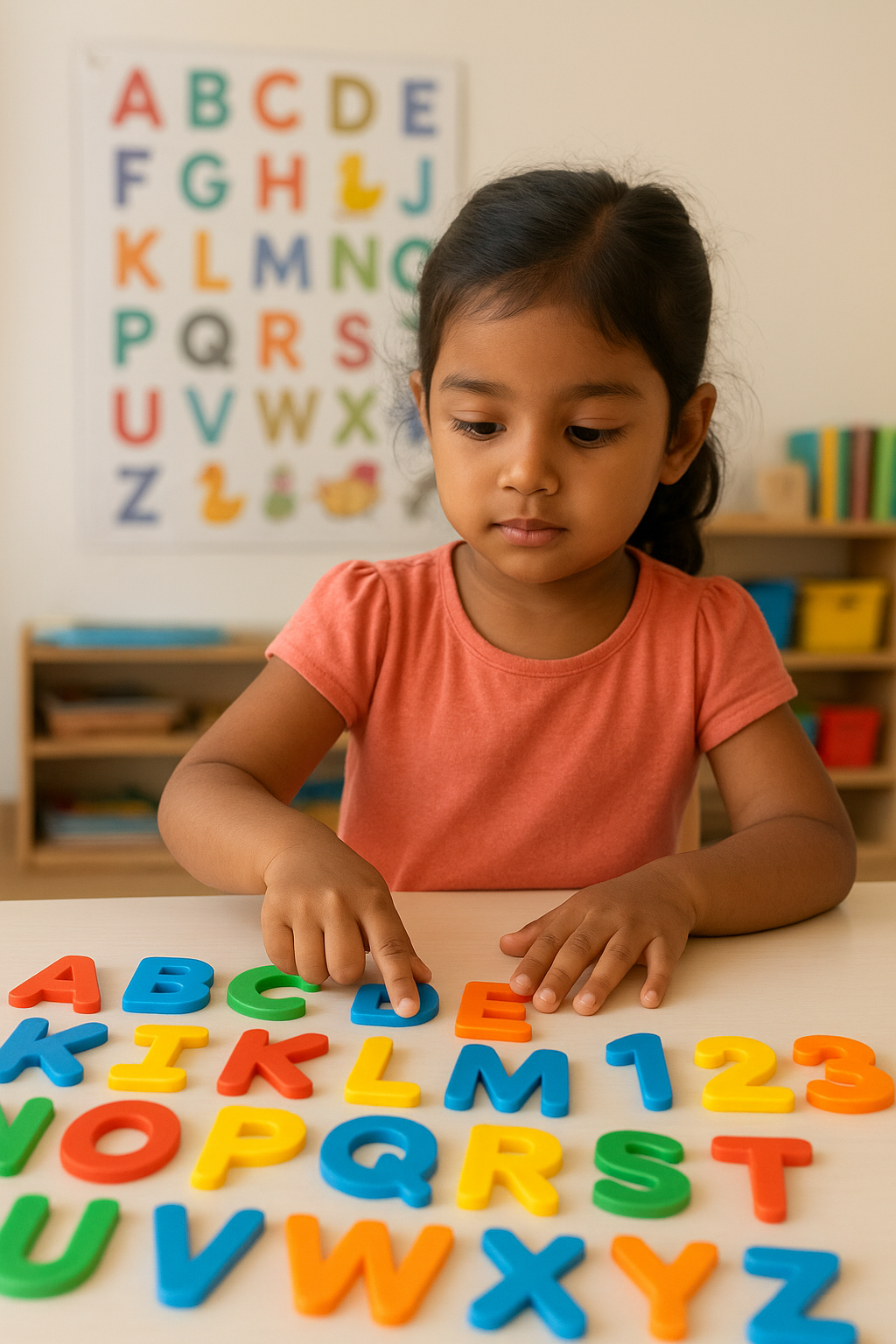
For preschoolers, the introduction of numbers and letters is an exciting part of early childhood . Children develop new ways of thinking about the world around them by using symbols and linking sounds to letters. At home or at preschool, it is important that kids are introduced to letters and numbers in a playful, gentle way, nurturing their natural curiosity. This process will help create strong foundations for reading, writing, and numeracy skills that will come up in their future years.
As preschoolers grow, their memory, attention, and listening skills develop with them. The rapid rate of brain growth makes this time (preschool years) the ideal time for early literacy and numeracy exposure. By providing opportunities to recognise letters and numbers at an early stage, children will:
- Develop stronger memory, attention span and listening abilities
- Increase vocabulary and communication skills
- Start to recognise patterns, shapes and symbols
- Improve their fine motor skills through tracing, colouring, and writing activities.
- Make connections between their daily lives (i.e. counting snacks, naming letters from signboards) and what they learn in the classroom
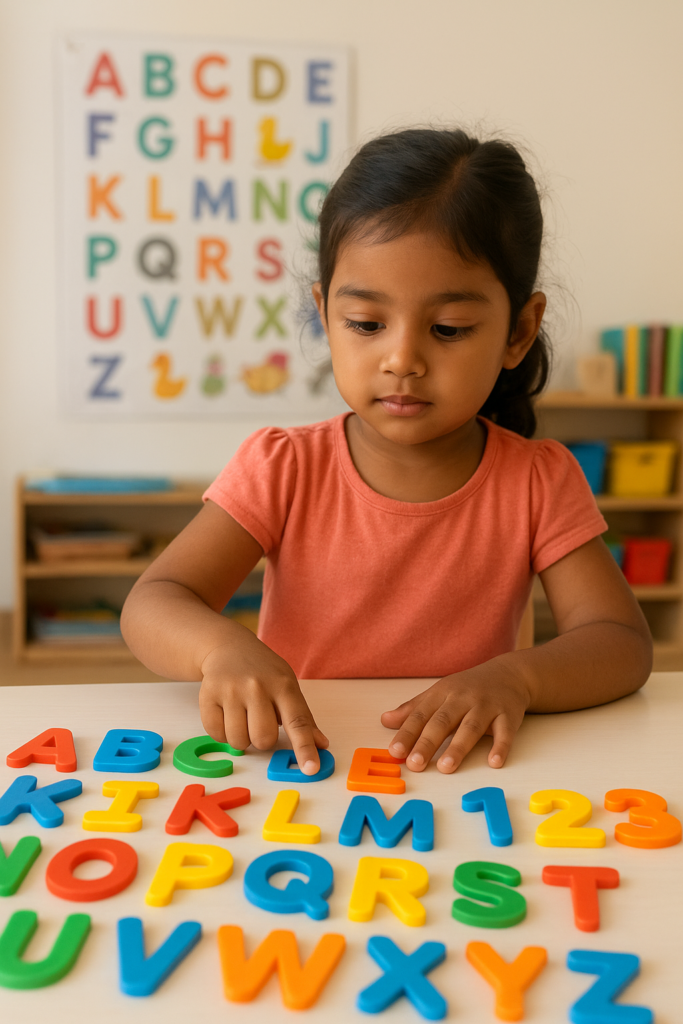
By exposing children’s minds early to these concepts does not mean that they are ‘pushing’ children to grow faster than they are. Rather, it opens up the opportunity for children to be exposed to opportunities to notice, interact, and understand.
How to Introduce Letters to Preschoolers
1.Letter Recognition should come first.
Children must be able to see and recognize letters before they can write or learn phonics. Introduce a few letters at a time to start. Use common locations to point out letters, such as cereal boxes, books, signboards, or posters. Children can learn that letters are everywhere by pointing out letters in real life.
2. Engage in Multisensory Activities
When all of their senses are active, preschoolers learn best. Try doing things like:
- Using playdough, rice, or sand to trace letters
- Using sticks or clay to form letters
- Drawing large capital letters with finger paint
- Singing and acting out alphabet songs
Learning is made enjoyable and muscle memory is strengthened by these enjoyable experiences.
3. Link Letters and Sounds
Start teaching basic phonics as soon as a child can identify a few letters. For instance:
“A says “aah” as in “apple.”
“B says buh like in a ball.”
Use simple, unambiguous examples at all times. To keep kids engaged rather than overwhelmed, keep sessions brief.
4. Read aloud together each day
One of the best strategies for fostering early literacy is storytime. As you read, let the child turn the pages, highlight repeating sounds, and point to large letters in titles. Books give letters a sense of purpose.
How to Introduce Numbers to Preschoolers
1. Count Objects Daily
Counting should feel natural. Show them to count everyday objects
For instance, they can count how many steps they took while going up and down the stairs, how many fingers are on their hand, how many toys were picked up while cleaning, and how many blocks they used while playing. Counting is the way to teach children that numbers represent quantity, not just symbols.
2. Counting objects are Fun & Hands-On
Pre-schoolers are very active learners. The following activities enable children to learn about the quantity of numbers:
- Sorting buttons or blocks by how many there are.
- Making number matches with real objects.
- Using beads for counting.
- Playing with numbers in games.
Children learn very quickly when they are allowed to touch and play with items that represent numbers.
3. Gradual Introduction of Number Symbols
After learning the quantity concept (what is 1 to 5), the next step is to introduce the numeric representation of the quantities (1, 2, 3). Therefore, it is best to begin with the first 5 numbers and gradually increase.
4. Counting with Singing
Songs such as “One, Two, Buckle My Shoe” or “Five Little Monkeys” create a fun atmosphere for learning how to count, and because children hear the song repeatedly, they are more likely to recall and repeat what they have learned.
Creating a Positive Learning Environment
1. Make lessons brief and enjoyable
The attention spans of preschoolers are typically short. In brief sessions lasting five to ten minutes, introduce letters or numbers. Exploration, not mastery, is the goal.
2. Recognize small achievements and milestones
Recognize, appreciate and reward your little ones each small milestone. Clapping, positive words and small rewards for correctly recognizing and spelling letters and numbers helps to encourage the child to take larger steps and build their confidence to learn more
3. Make Use of Play-Based Education
There should never be pressure to learn. Include:
- Alphabet puzzles
- Games with numbers
- Letter-filled blocks
- Picture books
- Play pretend with menus, tickets, or signs
Play improves comprehension more than worksheets by themselves.
4. Provide Mild Repetition
For children to retain concepts, activities must be repeated. Make use of reliable cues such as:
- “Let’s see how many spoons will get used today.”
- “Where on this page do you see the letter M?”
Repetition makes learning seem more natural.
Final Thoughts:
The introduction of letters and numbers for the first time in preschool is a fun process for children. When this process is facilitated through exploration, play, and gentle guidance, children begin developing early literacy/numeracy skills naturally.
The goal is not for children to learn to master every letter or count to 100, but rather to help them spark their interest, engage with the world around them, and establish their future learning by laying the foundation for all of the developmental growth that will occur throughout their lifetime.
As children learn letters and numbers from their supportive caregivers, they acquire meaning about the letters/numbers through the enjoyable experiences they have with them, thus they are encouraged to view letters and numbers as exciting discoveries they come across in their daily life.