
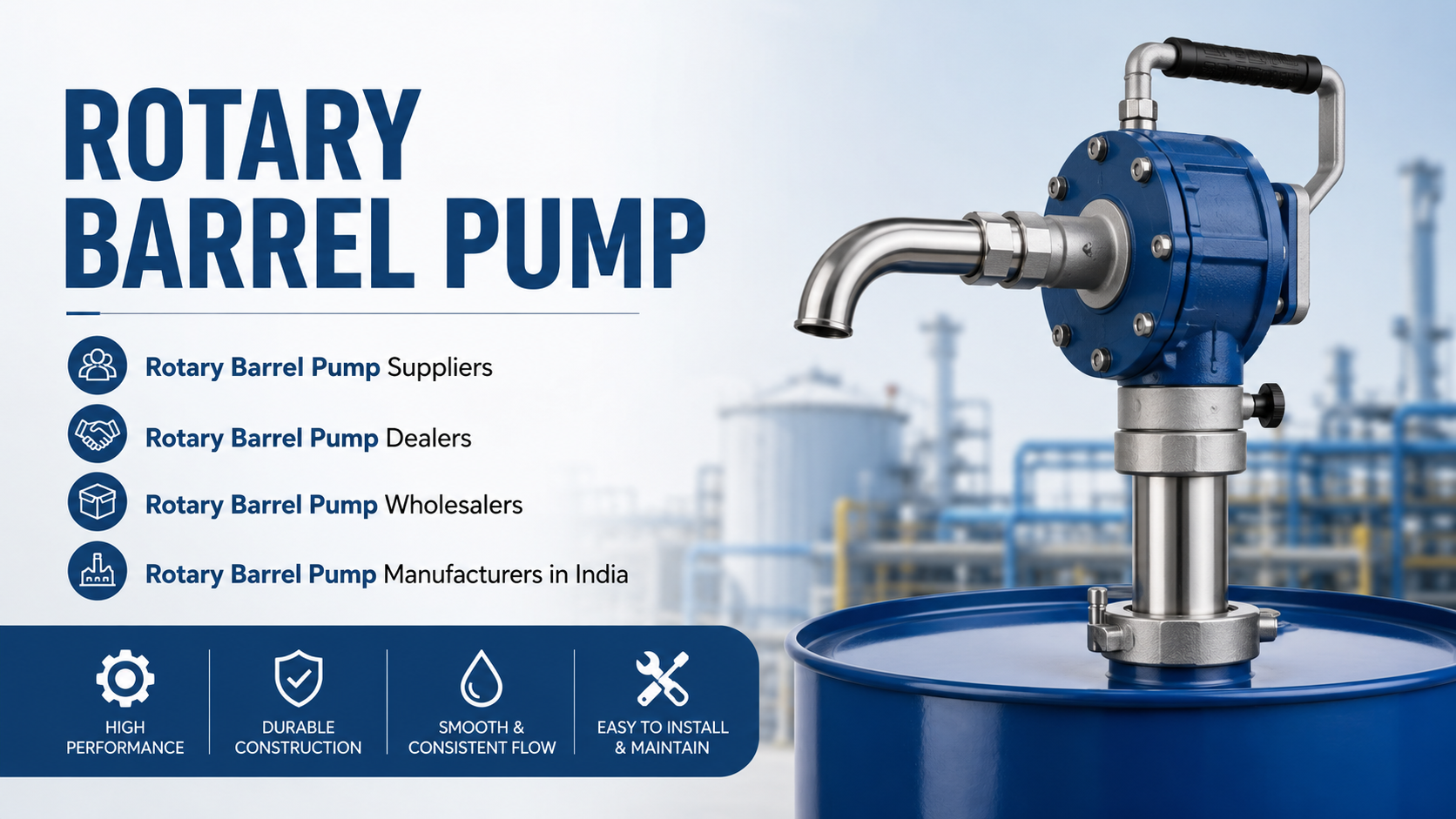
One leaking drum is enough to ruin a dispatch schedule. A Rotary Barrel Pump looks simple, but in factories handling oil, diesel, solvents, lubricants, acids, or process chemicals, that “simple” pump controls waste, safety, and transfer speed. Giza’s range is built for industrial fluid transfer, where one wrong material choice can turn a small saving into a rejected batch.
That happens more often than buyers admit.
Rotary Barrel Pump Build Details Buyers Should Check
The Material Match Buyers Usually Rush
A high-performance pump is not selected by handle comfort first. Giza rotary pumps are available in SS 304, SS 316, polypropylene, PVDF, and cast iron. SS 316 suits harsher chemicals than SS 304. PP is light and chemical-resistant. PVDF is for highly reactive liquids. Cast iron fits oil, diesel, and kerosene.
Here’s the overlooked detail: seals and wetted parts matter as much as the body. A supplier who says “chemical compatible” without asking liquid name, concentration, temperature, and viscosity is guessing.
Manual, Electric, and Air-Driven Options
Giza lists manual, electric, and air-driven options. Manual pumps suit controlled transfer. Electric pumps fit daily drum emptying. Air-driven pumps are useful where electrical safety matters. OSHA drum rules state that 55-gallon or larger flammable/toxic containers need containment equal to at least 35% of container volume, so transfer control is not minor.
Five Questions That Expose a Weak Supplier
- Material selection: A good supplier asks what liquid you transfer. A bad answer is, “same pump works for all chemicals.”
- Flow requirement: A serious seller asks litres per minute, drum size, and shift frequency. A bad answer is quoting only the cheapest model.
- Testing policy: Good Rotary Barrel Pump Suppliers talk about leakage, pressure, and dispatch checks. A bad answer is, “defect case by case.”
- Bulk readiness: Good Rotary Barrel Pump Wholesalers confirm stock, packing, and repeat-order pricing. A bad answer is vague delivery after payment.
- After-sales support: Good Rotary Barrel Pump Dealers explain installation and spare guidance. A bad answer is silence after the invoice.
How Better Pump Features Protect Margin
- Less spillage: Even 1 litre wasted per drum becomes serious when a plant handles 80 drums a month.
- Safer handling: Controlled pumping reduces lifting, tilting, and splash exposure around 205-litre drums.
- Lower rejection risk: Correct material selection protects product purity during chemical, solvent, and oil transfer.
- Faster unloading: Electric and high-flow options reduce idle time during repeated batches.
- Distributor confidence: Consistent models help Rotary Barrel Pump Wholesalers avoid warranty arguments.
- Longer working life: Corrosion-resistant materials reduce replacements when buyers stop forcing one pump into five applications.
The cheapest pump usually becomes expensive after the third complaint.
Here is another blog you might be interested in
How Custom Cremation Urns Create New B2B Opportunities
Why Rajkot Location Is a Supply Chain Decision
Giza operates from Rajkot, Gujarat, one of India’s active engineering belts. For buyers searching Rotary Barrel Pump Manufacturers in India, location affects machining access, fabrication support, transport timing. Rajkot’s road connectivity also helps buyers in Gujarat, Maharashtra, Rajasthan, and Delhi-NCR.
Most buyers compare price first. Smart buyers compare lead time, repeat stock, and how quickly the seller can correct a specification mismatch.
What We Check Before We Suggest a Pump
At Giza Pumps, we work with industrial buyers who cannot afford casual pump selection. Our product range includes SS 304, SS 316, PP, PVDF, and cast iron options because one material cannot honestly serve every fluid.
We’ve seen buyers ask for SS 304 where SS 316 or PVDF should have been discussed first. We stop that conversation early, because the wrong pump may look fine during dispatch and fail only after it reaches the shop floor.
For a faster quote from Giza Pumps, send the liquid name, drum size, required flow rate, and monthly quantity. We aim to respond to industrial enquiries within 24 working hours. MOQ depends on pump type, material, and packing requirement, so share whether you need retail, bulk, or distributor pricing.
Email Giza Pumps with your application details and ask for the right Rotary Barrel Pump model before finalising cost.
Conclusion
A Rotary Barrel Pump is not just a drum accessory; it is a control point in liquid handling. The right model protects material, people, and delivery timelines. As Indian chemical demand keeps growing toward 2030, buyers who specify pumps properly will face fewer maintenance surprises.
FAQs
What characteristics of the “Rotary Barrel Pump” makes in suitable for industrial uses?
A rotary barrel pump maintains a steady flow, and has the potential to be used with a range of materials. Barrel pumps that are designed for diesel, for example, cannot be used to pump acids, even if both liquids are contained within a 205 litre barrel.
How do I compare Rotary Barrel Pump Suppliers?
Ask for material options, liquid compatibility checks, delivery time, and warranty. If Rotary Barrel Pump Suppliers cannot explain why SS 316, PP, PVDF, or cast iron suits your liquid, move carefully.
Are Rotary Barrel Pump Dealers useful for bulk buyers?
Yes, but only when they understand application details. Good Rotary Barrel Pump Dealers help with selection; weak dealers only forward a catalogue.
Do Rotary Barrel Pump Wholesalers offer better pricing?
Usually, yes, for repeat quantity or distributor orders. The caveat is quality consistency. Rotary Barrel Pump Wholesalers should confirm model uniformity, packing, and dispatch inspection before price discussion.
Why choose Rotary Barrel Pump Manufacturers in India?
Indian buyers get easier communication and faster replacement discussion. Rotary Barrel Pump Manufacturers in India also understand oils, chemicals, solvents, diesel, and lubricants.
What details should I send before ordering?
Send liquid name, drum capacity, daily usage, required flow, and whether the transfer area has flammable or corrosive exposure. Without those 5 details, even a good supplier may quote the wrong pump.