

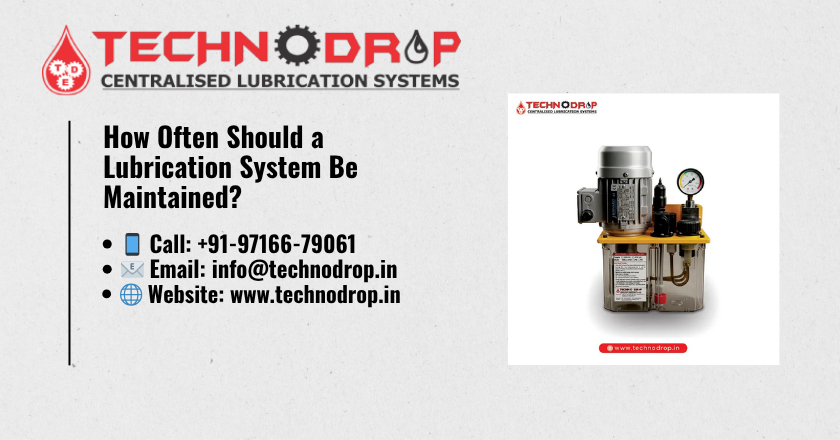
A machine rarely stops because of one big mistake. Most of the time, it’s a small thing ignored for too long — dry bearings, blocked lines, wrong grease, low oil level, or a pump that’s been making “that sound” for weeks.
That’s why maintaining a Lubrication System isn’t something you do only when the machine starts complaining. By then, honestly, you’re already late.
For business owners, the real question isn’t just “how often should we maintain it?” The better question is — how much downtime can you afford before maintenance starts looking cheaper?
A Lubrication System Needs Regular Attention, Not Guesswork
Here’s the thing. There’s no one fixed maintenance schedule that fits every plant.
A textile unit running machines 20 hours a day won’t need the same maintenance frequency as a fabrication workshop using equipment in one shift. A dusty foundry, a paper mill, a CNC shop, a food processing line — each one puts different pressure on lubrication components.
Still, in real industrial practice, most systems should be checked visually every day, inspected properly every week, and serviced in detail every month or quarter depending on load, environment, and running hours.
Sounds basic?
It is. And that’s where most businesses get it wrong.
They install a good automatic or centralized Lubrication System, then assume it’ll take care of itself forever. It won’t. Even the best system needs clean lubricant, proper pressure, working metering valves, open lubrication points, and trained eyes watching the signs.
Daily Checks: Small Things That Save Big Repairs
Daily checks don’t need a maintenance engineer with a laptop and diagnostic software. Sometimes, a good operator with common sense is enough.
Look for leakage near fittings. Check grease or oil levels. Listen for abnormal pump noise. See whether the pressure gauge is behaving normally. If there’s a transparent line or reservoir, check contamination, air bubbles, or unusual discoloration.
One minute here can save one full shift later.
I’ve seen factories lose bearings simply because nobody noticed the reservoir was almost empty. Not because the system was bad. Not because the machine was old. Just poor checking.
For business owners, this matters because daily inspection is cheap. Breakdown repair isn’t.
Weekly Lubrication System Maintenance Is Where Problems Show Up
Weekly maintenance should go a little deeper.
This is when your team should inspect filters, check pipeline condition, clean dust around the pump unit, review lubricant consumption, and confirm whether all lubrication points are actually receiving oil or grease. Don’t just see the pump running and feel satisfied.
A running pump doesn’t always mean proper lubrication.
Blocked injectors, damaged tubes, loose connectors, wrong viscosity oil, or hardened grease can quietly starve one part of the machine while the rest looks normal. That’s dangerous because partial lubrication failure is harder to notice than complete failure.
And honestly? It usually costs more.
If you work with experienced Lubrication System Manufacturers, they’ll usually recommend a weekly checklist based on machine type, cycle timing, lubricant grade, and pressure range. That checklist should not sit in a file. It should be used on the shop floor.
Monthly Service: Don’t Skip This One
Monthly service is where you move from “checking” to “correcting.”
Clean the reservoir area. Inspect pump mounting. Check electrical connections, timers, controllers, solenoid valves, pressure switches, and distribution blocks. If the system uses grease, check whether it’s flowing smoothly and not separating or hardening inside lines.
This is also a good time to compare lubricant consumption against production hours. If consumption suddenly increases, maybe there’s leakage. If it drops, maybe a line is blocked.
Both are problems.
Good Lubrication System Suppliers will usually guide you on lubricant compatibility and replacement intervals, especially if your machines operate under high temperature, heavy load, vibration, or dusty conditions.
And look, don’t mix lubricants casually. Grease compatibility issues are real. Wrong mixing can cause separation, clogging, and poor film strength. It’s not theory — it happens in plants more often than people admit.
Quarterly and Annual Maintenance: The Serious Inspection
Every three months, your maintenance team should review the full system performance. Not just the visible parts.
Check pressure settings. Inspect metering units. Test automatic cycles. Clean or replace filters. Verify lubrication timing. Check controllers and alarms. Review machine wear patterns. If any bearing, chain, slideway, or gear section shows unusual wear, don’t blame the operator immediately — check lubrication delivery first.
Annual maintenance should be more detailed. You may need flushing, line cleaning, seal replacement, pump servicing, controller calibration, and system audit.
This is where reliable Lubrication System Dealers and service teams make a difference. A good dealer won’t just sell the product and disappear. They’ll help you understand whether the system is still suitable for your machine load, production cycle, and working environment.
That’s real support.
You can visit this blog also
Disposable vs Cloth Diapers: Market Demand Insights
What Affects Maintenance Frequency?
You can’t maintain every system by calendar only. Running condition matters.
A machine working in a clean indoor assembly area may need less frequent servicing than equipment exposed to metal dust, cement dust, moisture, heat, or chemical fumes. High-speed machines also demand closer lubrication monitoring because small lubrication failures become big damage very quickly.
Here are a few things that change the maintenance schedule:
- Operating hours per day
- Dust, moisture, and temperature around the machine
- Type of lubricant used
- Load, speed, and vibration level
That’s enough to start with. Don’t overcomplicate it.
If your plant runs continuously, treat lubrication as a production-critical function, not a side activity. Because when lubrication fails, production doesn’t slow down politely. It stops.
Choosing the Right Partner Also Matters
A proper maintenance plan starts before installation.
Many business owners search for Lubrication System Suppliers in India or Lubrication System Dealers in india only by price. I get it — budgets matter. But the cheapest system can become expensive if sizing, pump selection, lubricant flow, and after-sales support are weak.
A company like Techno Drop can help businesses choose the right lubrication setup based on actual industrial use, not just catalogue numbers. That includes pump type, line layout, metering devices, lubricant grade, automation level, and service access.
Because honestly, a system that’s difficult to inspect will eventually be ignored.
FAQs
How often should a Lubrication System be checked?
A basic visual check should be done daily, especially in plants with continuous production. Weekly inspection and monthly service are usually practical for most industrial setups, but heavy-duty machines may need closer monitoring.
What happens if lubrication maintenance is ignored?
You’ll usually see bearing wear, overheating, chain failure, higher power consumption, abnormal noise, and unplanned downtime. The frustrating part is that many of these issues are preventable with simple maintenance discipline.
Can automatic lubrication systems run without maintenance?
No. Automatic systems reduce manual lubrication work, but they still need lubricant refilling, pressure checks, filter cleaning, line inspection, and periodic servicing.
Should I depend on operators or maintenance staff?
Both. Operators notice early symptoms during running, while maintenance teams handle detailed inspection and correction. The best plants use both, not one or the other.
Final Word
Let’s be real — a Lubrication System doesn’t ask for much. Clean lubricant, open lines, correct pressure, timely inspection, and someone responsible enough to check it before failure starts. Do that consistently, and your machines will run smoother, longer, and with fewer ugly surprises. Ignore it, and even the best equipment will eventually remind you who’s really in charge.