
I recently spent nine days traveling around Saudi Arabia, and to be completely honest, it was one of the most surprising journeys of my life. For a long time, this vast country was largely closed to casual holidaymakers. But things are changing fast.
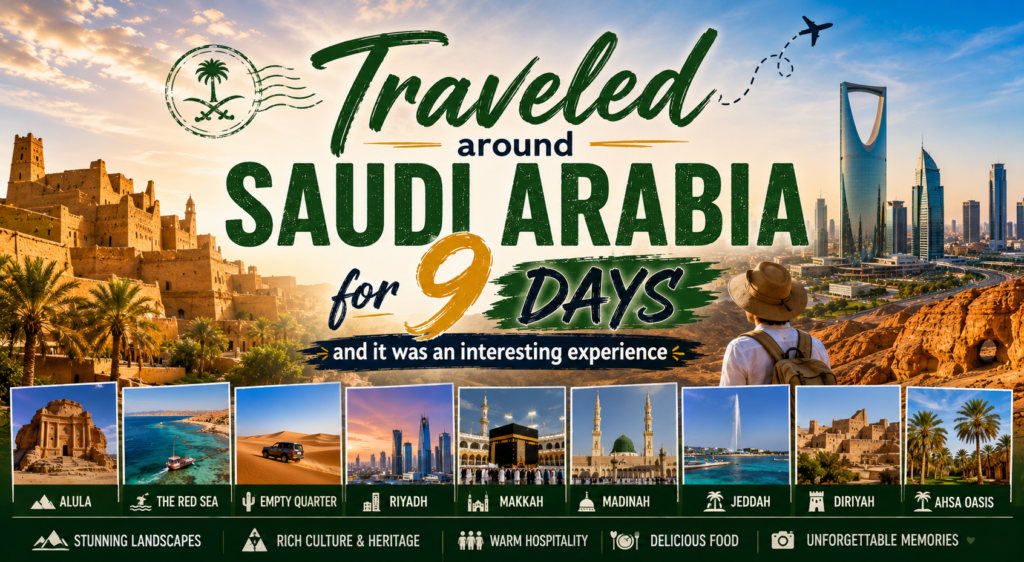
From the historic mud-brick alleys of Diriyah to the futuristic skyline of Riyadh, and the dramatic, tomb-carved desert landscapes of Al-Ula to the bustling, breezy Red Sea coast in Jeddah, Saudi Arabia is a fascinating mix of ancient heritage and rapid modernization. If you are curious about exploring this corner of the Middle East, here is everything you need to know, answered through the most common questions travelers ask.
How do I get a tourist visa for Saudi Arabia?
Getting into the country is much easier than it used to be. Saudi Arabia has introduced an online portal for electronic visas (e-Visas). The application is entirely digital, meaning you do not have to mail your physical passport to an embassy or wait in long queues at a consulate. To apply online, you just need a passport with at least six months of validity left, a digital passport-sized photo with a white background, and a credit or debit card to cover the visa and mandatory medical insurance fee. Once approved, the tourist e-Visa is sent straight to your email. It is typically a one-year, multiple-entry visa that allows you to stay in the country for up to 90 days.
Which countries are eligible for the Saudi e-Visa?
The online e-Visa system is open to citizens from over 60 countries, including the United States, Canada, the United Kingdom, European Union nations, Australia, New Zealand, and several Asian countries. If your passport is from an eligible country, the process takes only a few minutes. To find out if your passport qualifies for this hassle-free online entry, you can view the complete and updated country list on the Saudi Arabia Visa Eligibility. If your country is not on the e-Visa list, you will simply need to apply for a standard consular visa before booking your flights.
Is it safe to travel to Saudi Arabia right now?
Yes, Saudi Arabia is generally incredibly safe for tourists. In fact, violent crime rates are exceptionally low across the country, even in the middle of major cities at night. You can comfortably walk through local markets (souks) and public parks without feeling uneasy. However, standard travel common sense still applies. Keep a close eye on your personal belongings in crowded areas to avoid petty theft like pickpocketing. Additionally, keep yourself updated on regional travel advisories and avoid traveling near the southern border areas close to Yemen.
Can women travel alone in Saudi Arabia?
A major misconception is that women cannot travel to Saudi Arabia without a male chaperone. This is no longer the case. Solo female travel is perfectly legal and has become increasingly popular. You do not need a male guardian’s permission to book a hotel room, take an Uber, or board a domestic train. Local people are remarkably welcoming, and solo female travelers often find that Saudi women will approach them simply to say welcome, ask how they like the country, or take a friendly selfie together.
What is the best 9-day Saudi Arabia itinerary?
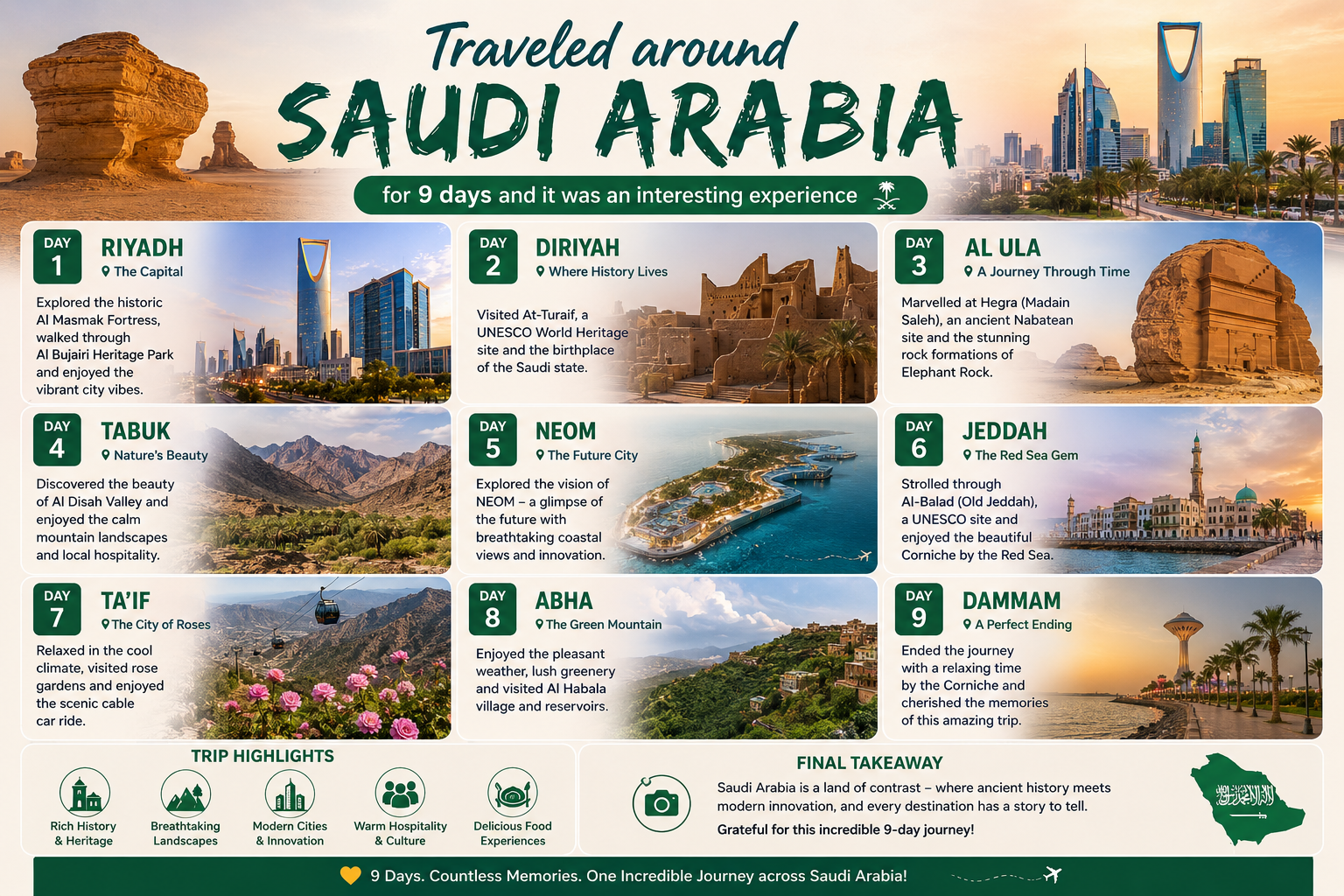
If you only have nine days, you want to focus on a route that highlights the country’s diverse landscapes and cities. Here is a tried-and-tested route:
- Days 1–2: Riyadh. Explore the capital city. Visit the historic Masmak Fortress, wander through the historic ruins of Diriyah, and catch the sunset from the Sky Bridge at the Kingdom Centre.
- Days 3–5: Al-Ula. Fly to Al-Ula, a stunning oasis in the desert. Visit Hegra (Saudi Arabia’s first UNESCO World Heritage site, famous for its ancient Nabataean tombs), hike around Elephant Rock, and walk through the Al-Ula Old Town.
- Days 6–8: Jeddah. Head to the coast. Walk through Al-Balad (Jeddah’s historical coral-stone old town), enjoy fresh seafood by the Red Sea corniche, and enjoy the relaxed, coastal vibe.
- Day 9: Departure. Spend your final hours picking up dates and spices from a local market before catching your flight home.
What is the dress code for tourists in Saudi Arabia?
While the strict rules of the past have eased, modest dress is still expected from both men and women out of respect for local culture.
- For Women: You do not need to wear a traditional black abaya (cloak) or cover your hair, except when entering a mosque or holy site. However, you should wear loose-fitting clothing that covers your shoulders and knees. Lightweight maxi dresses, linen trousers, and long-sleeve shirts are ideal.
- For Men: Avoid wearing sleeveless tank tops or short shorts in public areas. Long trousers and a simple T-shirt or button-down are the standard.
Is alcohol allowed in Saudi Arabia for tourists?
No, alcohol is strictly forbidden throughout Saudi Arabia. There are no bars, clubs, or licensed hotel lounges serving alcohol. Trying to bring alcohol into the country in your luggage is illegal and can lead to severe penalties, including heavy fines or deportation. Instead, embrace the local culture and try the thriving specialty café scene. Saudis love their coffee, and you will find incredible non-alcoholic mocktail bars and traditional tea lounges open late into the night.
Can unmarried couples share a hotel room in Saudi Arabia?
Yes. In the past, couples had to show proof of marriage to book a shared room. Under the new tourism guidelines, this rule has been relaxed for international tourists. Unmarried couples can easily book and share a hotel room without any questions asked. However, public displays of affection (like hugging or kissing in public) are still highly discouraged for everyone.
How do tourists get around in Saudi Arabia?
Getting around is surprisingly convenient. For long distances—like traveling from Riyadh to Jeddah—domestic flights are quick and affordable. If you are traveling between Medina, Jeddah, and Mecca, you can ride the Haramain High-Speed Railway, which travels up to 300 km/h. Within cities, ride-sharing apps like Uber and Careem are widely used, reliable, and reasonably priced. If you want to explore rural desert landscapes like Al-Ula at your own pace, renting a car is straightforward, provided you have an International Driving Permit.
What is the local food like in Saudi Arabia?
Saudi cuisine is rich, comforting, and packed with flavor. The national dish is Kabsa, a beautifully spiced rice dish served with roasted chicken or lamb, topped with toasted nuts and raisins. Make sure to try Mutabbaq (a thin, fried stuffed pancake filled with minced meat or vegetables) and end your meals with fresh local dates served alongside hot Arabic coffee flavored with cardamom and saffron.
Can non-Muslims visit Mecca and Medina?
Historically, both of these holy cities were closed to non-Muslims. Today, Medina’s city center is open to non-Muslim visitors, allowing tourists to view the stunning architecture of the Prophet’s Mosque from the outside. However, the immediate vicinity of the holy sites in Mecca remains strictly restricted to Muslims. If you are a non-Muslim traveler, make sure to plan your travels around these boundaries out of respect for religious practices.
When is the best time of year to visit Saudi Arabia?
The absolute best window to visit is between November and April. During these cooler winter months, temperatures are pleasant, usually ranging from 15°C to 25°C (59°F to 77°F), which is perfect for walking tours and desert excursions. Avoid visiting during the peak summer months (June to September), as temperatures regularly climb past 40°C (104°F), making outdoor exploration virtually impossible during the day.
Planning Your Trip? Let Us Help with Your Visa!
Preparing for an adventure to Saudi Arabia is an exciting process, but making sure your travel documents are in order is the most important first step. To ensure your journey starts on the right foot, we offer a hassle-free, secure pathway to secure your travel visa.
Why Choose Us?
- Reliable Travel Visa Services: Our global approach has assisted numerous travelers in obtaining their Visa, ensuring zero errors and smooth border entry.
- Round-the-Clock Assistance: Reach out to us 24/7, and our dedicated team of experts will respond to your queries within 72 hours.
- Experienced Visa Consultants: Receive expert, personalized guidance to ensure the swift acceptance of your application.
- Efficient Visa Application Process: No complicated government portals. Apply for your Visa in minutes using our highly simplified online form.
https://articlenest.store/