
Whether you’re living in bustling New York City, sunny Los Angeles, or fast-growing Houston, one thing remains the same—dental pain can disrupt your daily life in an instant. From mild irritation to unbearable throbbing, pain initiating from the teeth or their supporting structures often leads to uneasiness, stress, and reduced quality of life. In many cases, people dealing with severe discomfort turn to effective medications like Aspadol 100mg, especially when standard Dental pain relief options don’t work. Since Tapentadol is used medically for the treatment of moderate to severe pain, and Tapentadol is a novel oral opioid analgesic, it can provide temporary relief under proper medical guidance.
Dental pain is not just about a toothache—it often signals underlying issues like Dental (tooth) infection, decay, injury, or loss of a tooth. Understanding the causes, symptoms, and treatments can help you manage the discomfort effectively and prevent complications.
What Causes Dental Pain?
Dental pain can arise from several conditions, most commonly:
- Tooth decay or dental decay damaging the inner layers of the tooth
- A cracked tooth or an infection affecting nerves
- Pain after an injury, procedure, or dental problems
- Gum disease or inflammation of supporting structures
- Dental (tooth) infection spreading to surrounding tissues
In the United States, poor oral hygiene, high sugar diets, and delayed dental visits are common contributors. When untreated, these issues worsen and lead to intense discomfort.
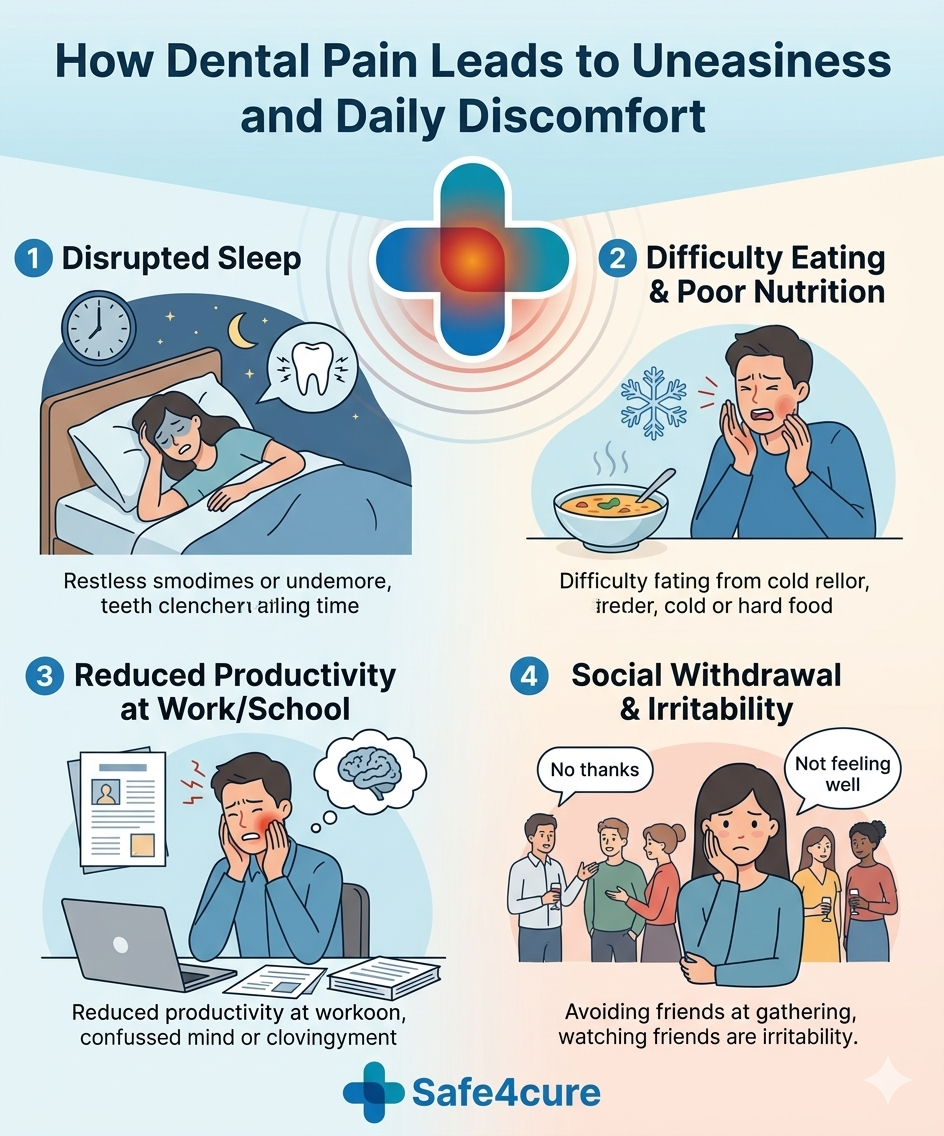
How Dental Pain Leads to Uneasiness
Dental pain doesn’t just stay in your mouth—it affects your entire body and mind. Here’s how:
1. Constant Irritation and Discomfort
Persistent tooth decay or dental decay can cause continuous throbbing pain, making it hard to concentrate on daily tasks.
2. Sleep Disturbances
Pain often intensifies at night, leading to insomnia and fatigue. Many people in cities like Chicago report disrupted sleep due to untreated dental issues.
3. Difficulty Eating and Speaking
Pain initiating from the teeth or their supporting structures makes chewing difficult, leading to nutritional issues and frustration.
4. Emotional Stress and Anxiety
Unresolved dental problems often lead to anxiety, irritability, and uneasiness, especially when the pain becomes severe.
Common Dental Pain Symptoms
Recognizing Dental pain symptoms early can help prevent complications. Look out for:
- Sharp or throbbing pain
- Sensitivity to hot or cold foods
- Swelling in gums or face
- Bad taste due to infection
- Pain after an injury, procedure, or dental problems
If ignored, these symptoms can escalate into serious infections.
Types of Dental Pain
Understanding Dental pain types can help determine the underlying cause:
- Sharp Pain: Often due to a cracked tooth or exposed nerve
- Throbbing Pain: Common in Dental (tooth) infection
- Sensitivity Pain: Linked to enamel wear or tooth decay
- Radiating Pain: May indicate deeper infection spreading
Each type requires a different Dental pain treatment approach.
Unbearable Tooth Pain: What to Do at Home
When you experience unbearable tooth pain, immediate relief is essential. Here are some effective Dental pain home remedies:
- Rinse with warm salt water to reduce inflammation
- Apply a cold compress to reduce swelling
- Use over-the-counter pain relievers
- Avoid extremely hot or cold foods
- Maintain oral hygiene even during pain
These remedies can provide temporary Dental pain relief but are not a substitute for professional care.
Professional Dental Pain Treatment Options
For long-term relief, professional Dental pain treatment is necessary. Dentists in cities like Miami and Dallas commonly recommend:
- Fillings for dental decay
- Root canal therapy for infected pulp
- Tooth extraction in severe cases
- Antibiotics for Dental (tooth) infection
In cases of severe pain, doctors may prescribe medications. A tapentadol pill may be considered when other treatments fail, but it should always be used under medical supervision.
Role of Pain Medications
When pain becomes intense, medications can help manage it effectively. Since Tapentadol is used medically for the treatment of moderate to severe pain, it is sometimes prescribed in controlled settings. Being a novel oral opioid analgesic, it works by altering pain signals in the brain.
However, medications like Aspadol 100mg should only be used responsibly and under professional guidance. Online platforms such as Safe4cure are often explored by patients for accessing prescribed medications conveniently.
Preventing Dental Pain
Prevention is always better than cure. Here are some tips:
- Brush and floss daily
- Avoid sugary foods and drinks
- Schedule regular dental checkups
- Treat minor dental decay early
- Use protective gear during sports to prevent injury
Maintaining oral hygiene can significantly reduce the risk of pain and discomfort.
FAQs
- What is the most common cause of dental pain?
The most common cause is tooth decay or dental decay, which damages the tooth structure and exposes nerves.
- Can dental pain go away on its own?
Mild pain may subside temporarily, but underlying issues like infection or a cracked tooth require professional treatment.
- What are the best Dental pain home remedies?
Saltwater rinses, cold compresses, and maintaining oral hygiene are effective temporary solutions.
- When should I see a dentist?
You should seek help if pain lasts more than 1–2 days, worsens, or is accompanied by swelling or fever.
- Is Tapentadol safe for dental pain?
Tapentadol is used medically for the treatment of moderate to severe pain, but it must be taken only under a doctor’s supervision.
Post By